Utility Meter Recycling and Decommissioning
Utilities are operating in a market where used electric, gas, and water meters have genuine secondary demand. That demand has increased in recent years, influenced by higher copper prices, supply-chain constraints, and the rising cost of new meters. Functional units, in particular, attract attention from buyers looking for lower-cost alternatives.
That reality exists regardless of whether a utility participates in resale.
What tends to matter more over time is how meters are handled once they leave service—and whether those decisions remain defensible years later, when questions surface from regulators, auditors, or the public.
Interco does not resell utility meters. This is a deliberate choice shaped by experience rather than theory. Over time, it has become clear how difficult it is for utilities to maintain visibility and accountability once meters leave controlled custody, especially when questions arise later about handling, data exposure, or downstream use. Based on that experience, permanent removal from circulation has proven to be the most responsible and defensible approach.
Utility meter recycling and decommissioning at Interco is therefore built around a single objective: ensuring meters do not re-enter service in any form. Meters are physically destroyed or rendered non-functional before they leave Interco custody. There is no reuse path, no remarketing channel, and no downstream handling based on assumption or trust.
Industrial Sources and Material Characteristics
Metallic powders and dust arise from a wide range of industrial activities, including machining, grinding, additive manufacturing support processes, foundry operations, aerospace fabrication, automotive production, and energy-related manufacturing. Fine particulate material may contain high-value base and precious metals, alloys, and trace elements that carry economic worth if recovered properly. At the same time, these materials can pose safety, environmental, and handling challenges if not managed with technical precision. Interco approach integrates rigorous evaluation with controlled processing so that value is captured without exposing suppliers to unnecessary risk.
Why Utility Meter Resale Creates Long-Term Risk
Utility meters are not inert scrap. Even older or non-smart meters can contain serial identifiers, firmware, usage data, or components that tie them back to a specific system, territory, or service address. Once a meter enters a resale stream, the original utility loses visibility entirely. Where the meter goes, how it is configured, and whether embedded information is accessed becomes difficult—often impossible—to verify.
That loss of control is usually where problems begin.
Meters that seem harmless at the time of removal can surface later in unexpected places. Serial numbers get traced. Components are reused. Equipment appears in environments with little oversight. When that happens, the issue is rarely whether resale was technically allowed at the time. The more difficult question is why the utility can no longer provide a clear, defensible explanation of what happened to the asset.
Utilities operate under public scrutiny. State utility commissions, auditors, regulators, and sometimes the public itself expect utilities to be able to explain asset handling long after equipment is retired. When meters re-enter circulation—particularly through informal or international channels—those explanations often become thin very quickly.
For this reason, utility meter recycling and decommissioning at Interco ends with destruction or permanent decommissioning. Once a meter is processed, it cannot be reused, redeployed, or resold.
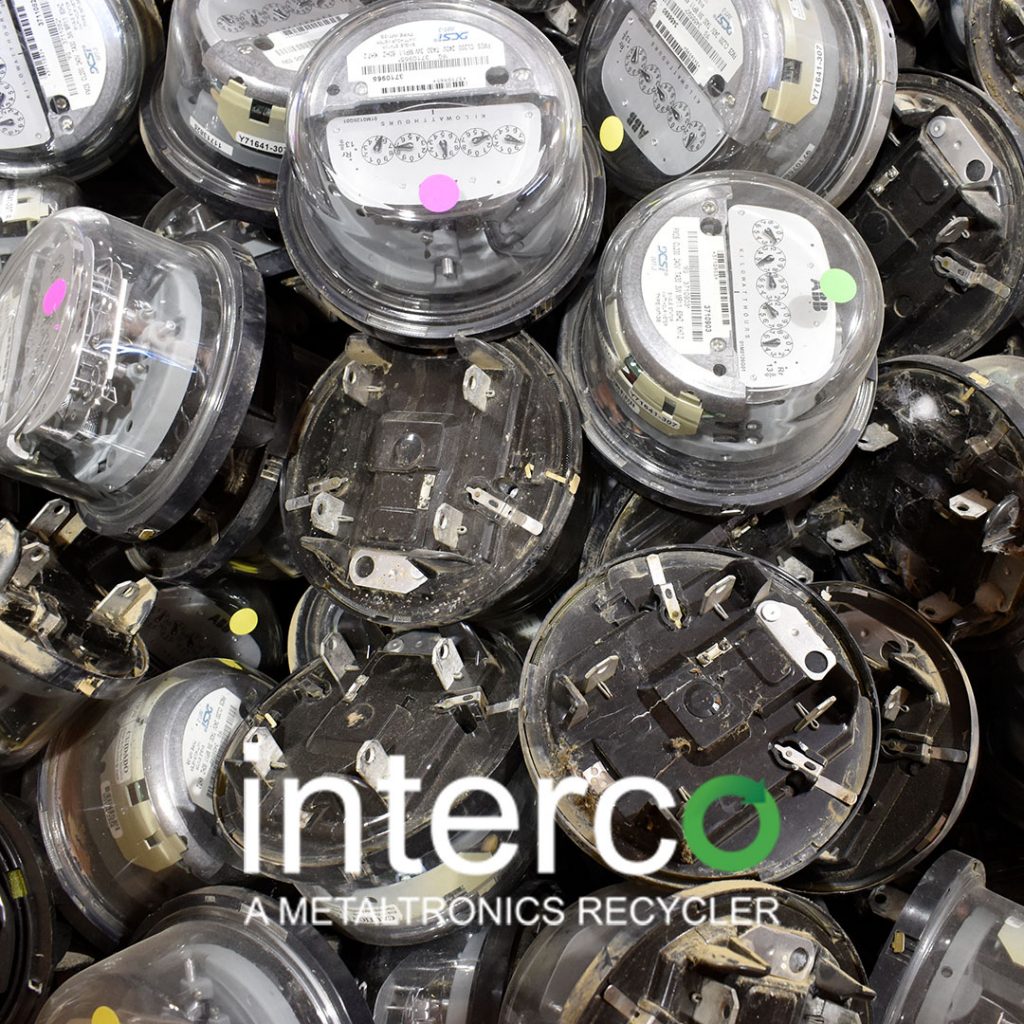
Why a Resale Market Exists—and Why It Often Fails in Practice
The existence of a resale market is not difficult to understand. The drivers are largely economic.
- Commodity prices have increased the cost of new meters
- Secondary buyers want working equipment at lower cost
- Export markets accept used meters with limited oversight
- Functional meters appear reusable on paper
- Short-term recovery value can look attractive internally
None of those factors eliminate risk. In practice, resale does not resolve exposure; it relocates it while removing the utility’s ability to audit outcomes. Once a meter leaves custody through resale, the utility no longer controls the narrative if questions surface later.
That trade-off may appear reasonable in the short term, but it rarely holds up over time.
Data and Regulatory Exposure in Utility Meters
Meters exist within a broader system. They are not standalone pieces of metal.
Utility meter recycling and decommissioning has to account for practical realities, including:
- Customer usage data that may reside locally or be accessible through firmware
- Serial numbers that can be linked back to service addresses
- Smart or wireless modules that retain configuration data or credentials
- Location or infrastructure associations embedded in systems
- Oversight from state utility commissions and related privacy frameworks
Electric and gas utilities are not subject to HIPAA, but that does not mean meter data is risk-free. State privacy rules, public utility commission requirements, NIST guidance, and laws such as CCPA can apply depending on jurisdiction and meter configuration. Once meters are resold, utilities lose the ability to demonstrate control over any of these issues.
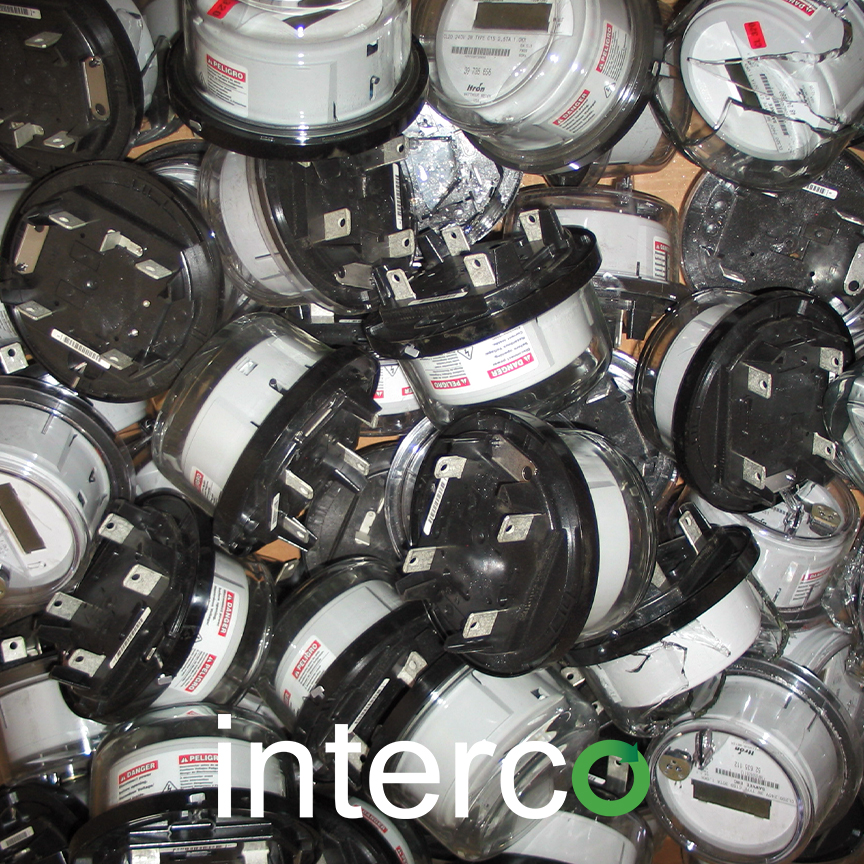
When Meters Leave Service
Meters leave service for many reasons: upgrades, smart-meter rollouts, replacements, failures, tampering events, or system changes. Once removed, utility meter recycling and decommissioning should focus on irreversible outcomes.
Interco handles electric meter recycling, gas meter recycling, and water meter recycling with the expectation that meters will not be reused. Physical destruction or permanent decommissioning ensures that outcome and prevents future exposure tied to redeployment.
Operational Control and Chain of Custody
Utility meter recycling is not simply a disposal task. It is an operational process that needs to hold up later.
Interco manages meters from receipt through final processing with documented chain-of-custody controls. Meters are not blended into opaque downstream streams or passed along with vague assurances. Each step is designed so that, if questions arise years later, there is a clear and defensible answer.
That level of control matters more often than many organizations expect.
Balancing Value and Responsibility
The existence of a resale market does not remove responsibility. In practice, it increases it.
The financial upside of resale is often modest. The downside—regulatory inquiry, reputational damage, or loss of public confidence—can be significant and long-lasting. A single poorly handled meter can undo years of otherwise careful asset management.
Utility meter recycling and decommissioning should prioritize defensibility over short-term recovery value. Public trust is difficult to rebuild once it is lost.
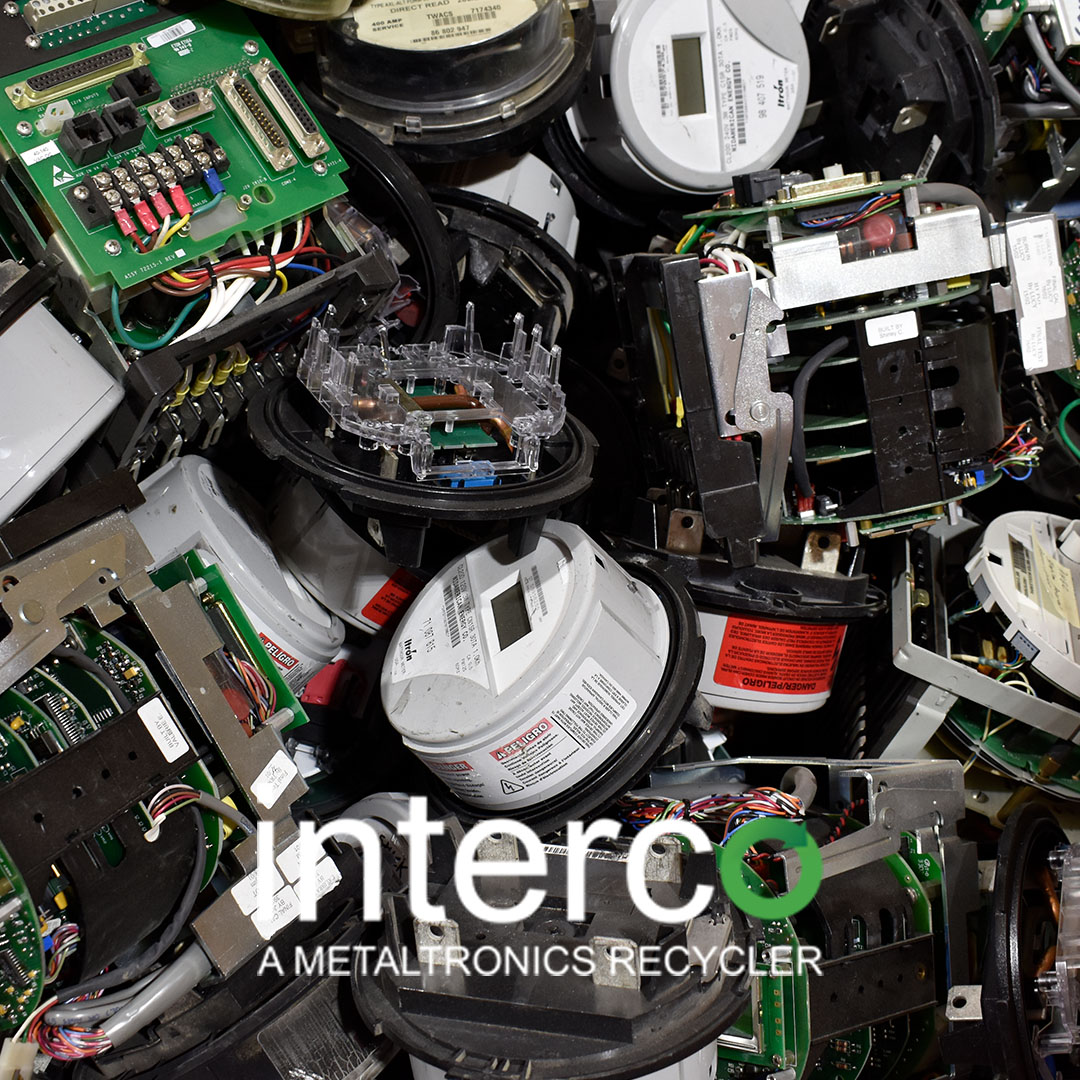
A Practical Approach to Utility Meter Recycling
The purpose of utility meter recycling and decommissioning is not to extract every possible dollar from retired equipment. It is to eliminate risk and move forward without unanswered questions.
Interco provides a controlled, documented process that permanently removes meters from circulation and ensures they cannot be reused, resold, or redeployed. That approach reflects how utilities tend to operate in practice—cautiously, deliberately, and with an understanding that conservative decisions often age better than aggressive ones.