Recycle Lithium-Ion Batteries
Leadership in Lithium-Ion Battery Recycling at Industrial Scale
Interco is a world leader in lithium-ion battery recycling, with a primary focus on electric vehicle batteries and the industrial-scale challenges they create. By weight, complexity, and risk, EV batteries represent the dominant segment of the lithium-ion recycling market. Interco has built the infrastructure, logistics capability, and processing discipline required to manage the growing volume of end-of-life, defective, recalled, damaged, and production-scrap EV batteries entering the global system.
As electric vehicles mature and early-generation fleets age, automotive OEMs face a rapidly accelerating flow of battery material. Warranty failures, recalls, accident damage, thermal events, transportation issues, and field removals are no longer edge cases—they are operational realities. Interco is structured to absorb this volume, providing OEMs with a partner capable of rapid response, controlled execution, and responsible downstream placement at scale.
Global Sourcing, Logistics, and Intake for EV Batteries
Interco routinely purchases EV battery material from sources worldwide while coordinating controlled inbound logistics into domestic processing operations. The Interco logistics department manages full truckload and less-than-truckload pickups from dealerships, service centers, manufacturing plants, storage yards, ports, and consolidation hubs. This capability allows Interco to respond immediately to localized failures as well as large-scale recall or decommissioning events without bottlenecks.

The ability to handle the tsunami of EV battery material distinguishes Interco from other domestic recyclers. EV batteries do not fail predictably. They arrive in varying conditions, states of charge, and configurations, often requiring urgent removal from circulation. Interco has built operational elasticity into intake, logistics, and processing workflows, allowing capacity to scale as conditions change. Few operators in the domestic marketplace can execute at this level.
Lithium-ion EV batteries arrive in many forms, including full vehicle packs, modules, loose cells, damaged assemblies, and partially dismantled units. Operations at Interco begin with structured intake and evaluation to determine chemistry, configuration, condition, and risk profile. State of charge, physical damage, contamination, and compatibility are assessed immediately to determine the safest and most effective processing pathway.
Core Elements of EV Battery Intake and Evaluation
- Identification of battery chemistry, configuration, and physical condition upon arrival.
- Immediate assessment of state of charge, damage, contamination, and compatibility risks.
- Determination of the safest and most effective processing pathway based on intake findings.
- Segregation of batteries by chemistry and risk profile to prevent unsafe handling.
- Early routing decisions that align logistics, processing capacity, and downstream readiness.
Safety-Driven Processing and Chemistry-Agnostic Workflows
Safety is foundational to EV battery recycling. These batteries contain stored energy and reactive chemistries that can present fire, thermal runaway, or environmental hazards if mishandled. The approach at Interco integrates controlled discharge protocols, chemistry segregation, fire-mitigation systems, and dedicated staging areas designed to manage risk throughout the lifecycle of EV battery material. These controls align with insurer expectations, regulatory requirements, and OEM governance standards.
Processing EV batteries requires disciplined, sequential workflows that vary by chemistry and pack design. Packs and modules are dismantled to isolate cells, casings, bus bars, cooling systems, and electrical hardware. Cells are stabilized before any mechanical processing occurs. Subsequent steps may include shearing, crushing, liberation, and separation depending on chemistry and downstream requirements. Each workflow is executed to preserve recoverable value while maintaining safety and compliance.
Recovered materials from EV batteries include nickel, cobalt, lithium, manganese, copper, aluminum, steel, and other constituents. Interco processes all lithium-ion chemistries used in EV platforms, including NMC, NCA, LFP, LCO, LMO, blended chemistries, legacy formulations, and emerging designs. Many recyclers limit operations to one or two chemistries. Interco is chemistry-agnostic, built to process whatever enters the system rather than forcing OEMs to segment material across multiple outlets.
Processing Disciplines Applied to EV Batteries
- Controlled discharge and stabilization prior to any mechanical processing.
- Chemistry-based segregation to prevent incompatible processing pathways.
- Sequential dismantling of packs and modules to isolate recoverable components.
- Mechanical processing steps tailored to chemistry and downstream requirements.
- Recovery workflows designed to preserve value while maintaining safety and compliance.
Energy Storage Systems and Broader Lithium-Ion Battery Streams
While EV batteries represent the largest share of lithium-ion battery material by weight, energy storage systems form the second major pillar of the Interco battery recycling operation. Utility-scale, commercial, and industrial energy storage deployments are expanding rapidly to support grid stability, renewable energy integration, backup power, and load balancing. These systems generate large, concentrated volumes of battery material during upgrades, failures, and decommissioning events.
Energy storage system batteries often arrive in large racks, containers, or modular assemblies with high energy density and varied chemistries. Decommissioning projects can release significant quantities of batteries simultaneously, creating logistical and safety challenges that overwhelm many recyclers. Interco is structured to handle these events without disruption, coordinating controlled logistics, safe intake, and scalable processing for energy storage operators, utilities, and developers.
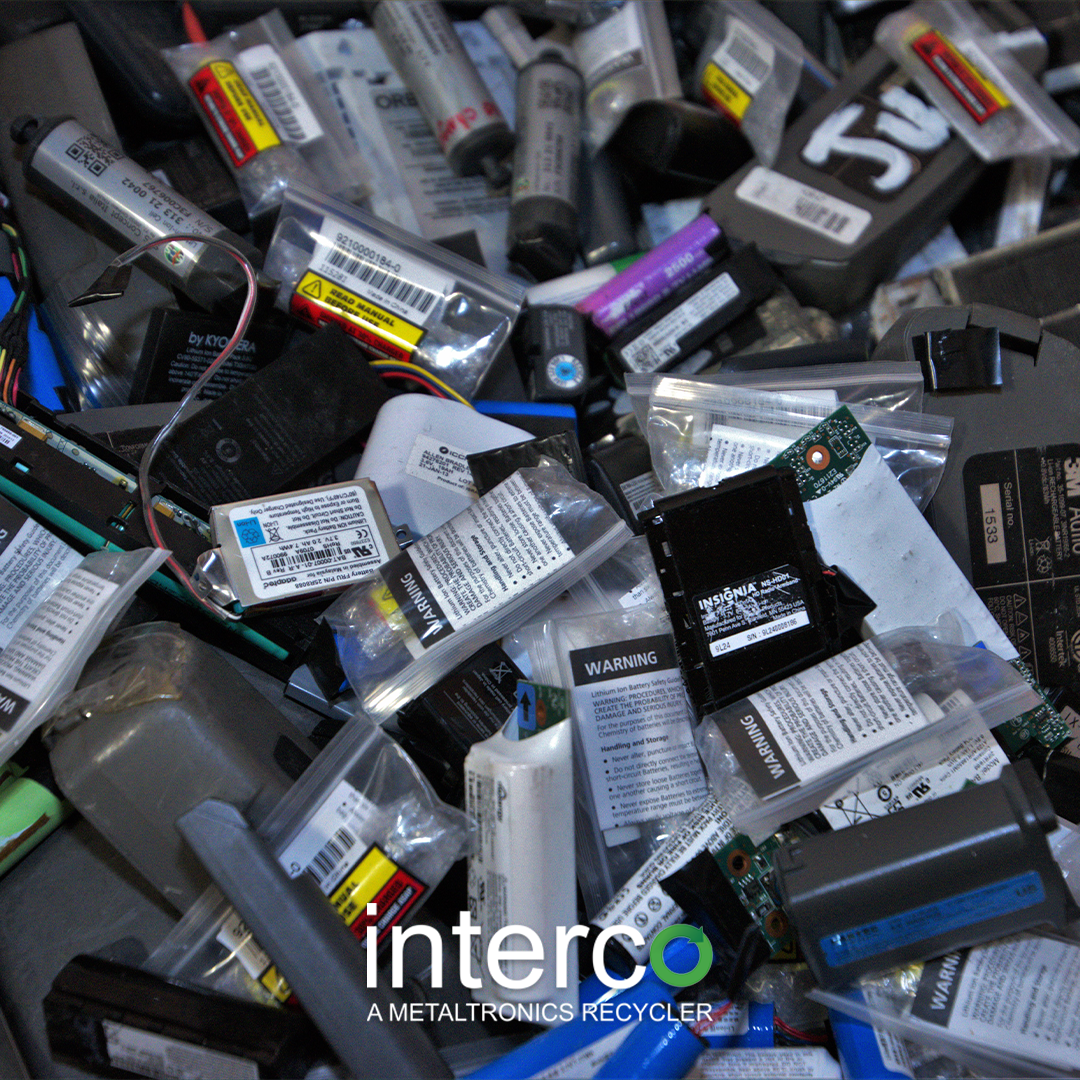
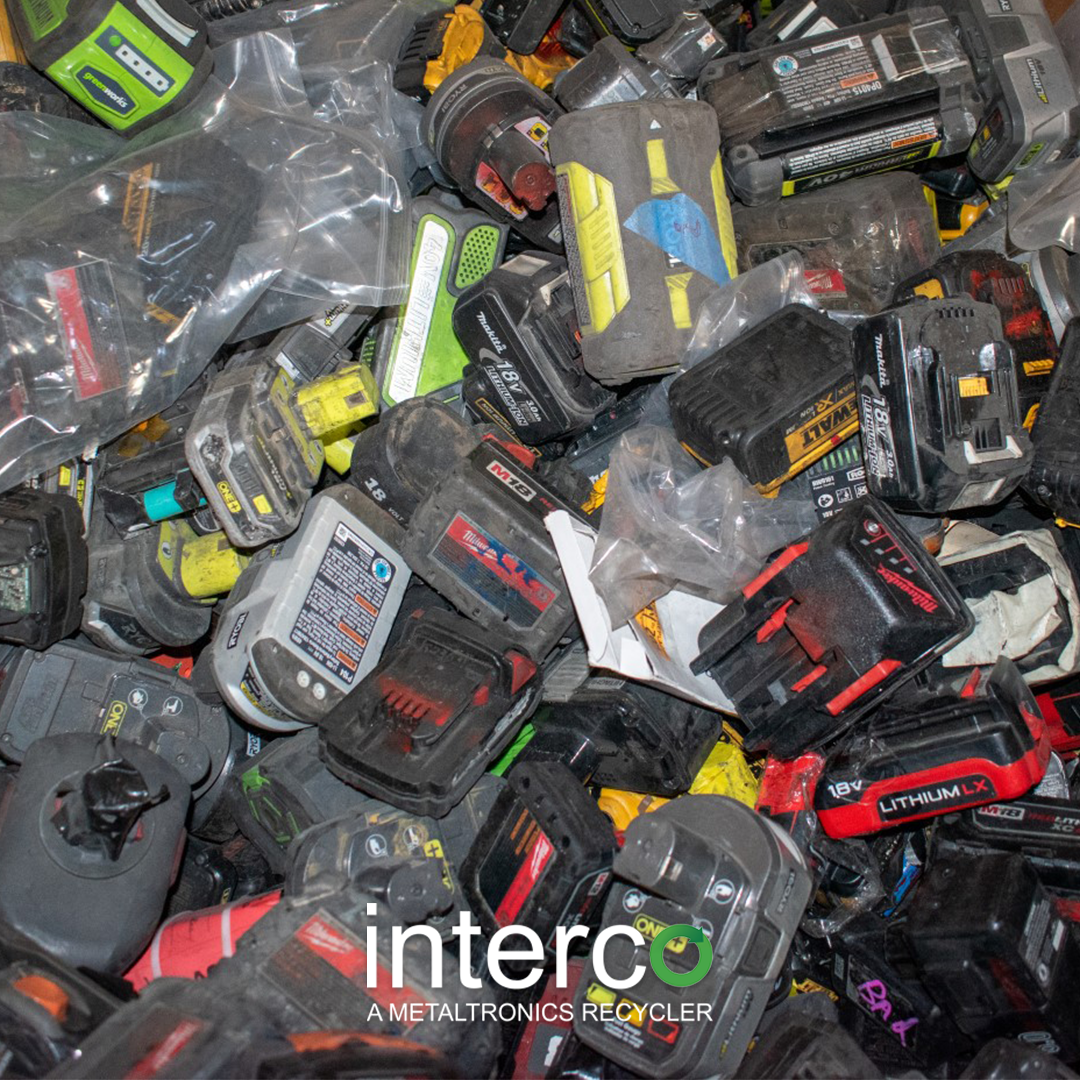
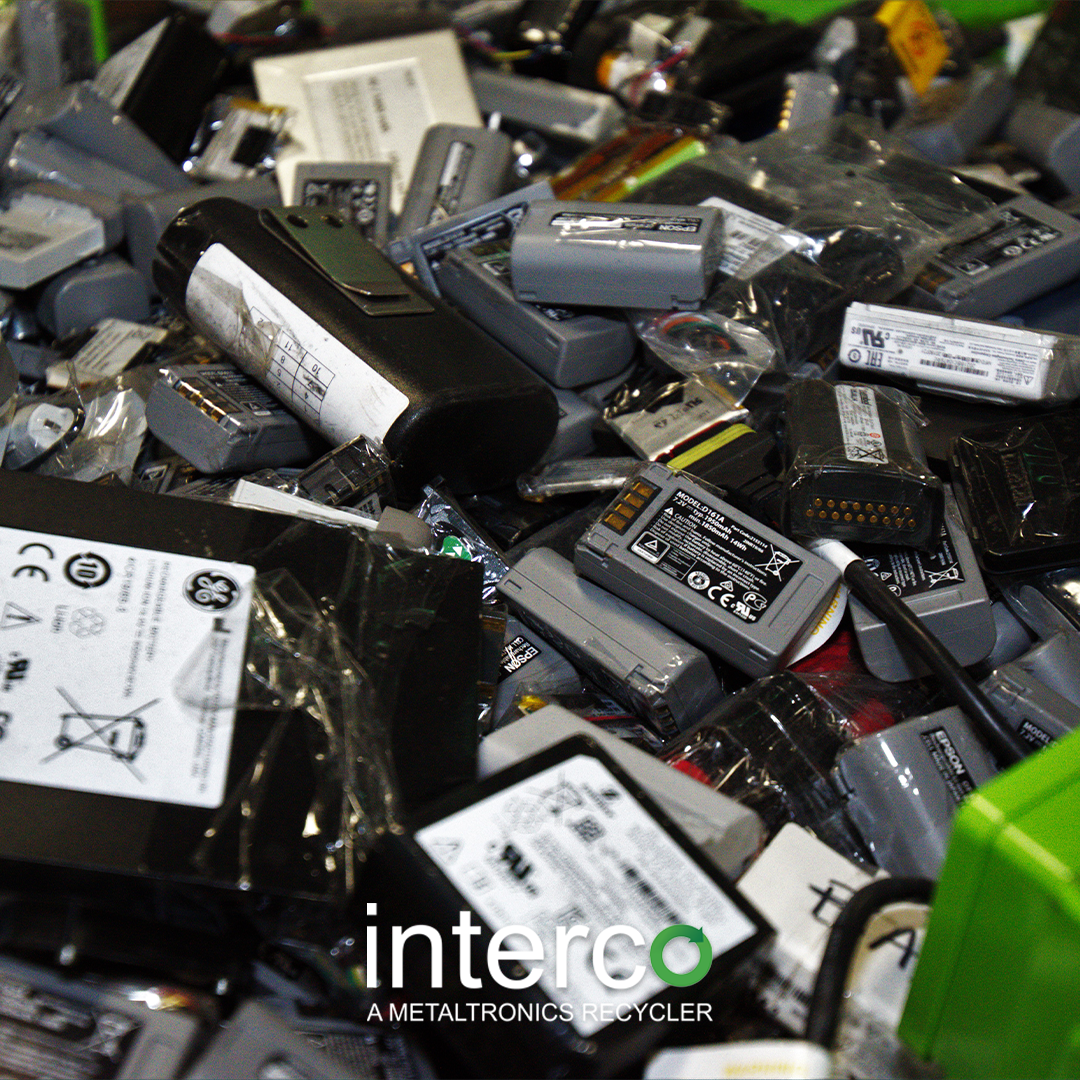
Beyond EV and energy storage systems, Interco recycles all other lithium-ion batteries. This includes batteries from laptops, tablets, mobile phones, wearables, scooters, e-bikes, power tools, medical equipment, industrial electronics, telecommunications hardware, and stationary backup systems. These batteries arrive in countless formats and conditions, often aggregated into mixed loads. The approach at Interco is designed to manage this diversity without requiring suppliers to pre-sort material into inefficient categories.
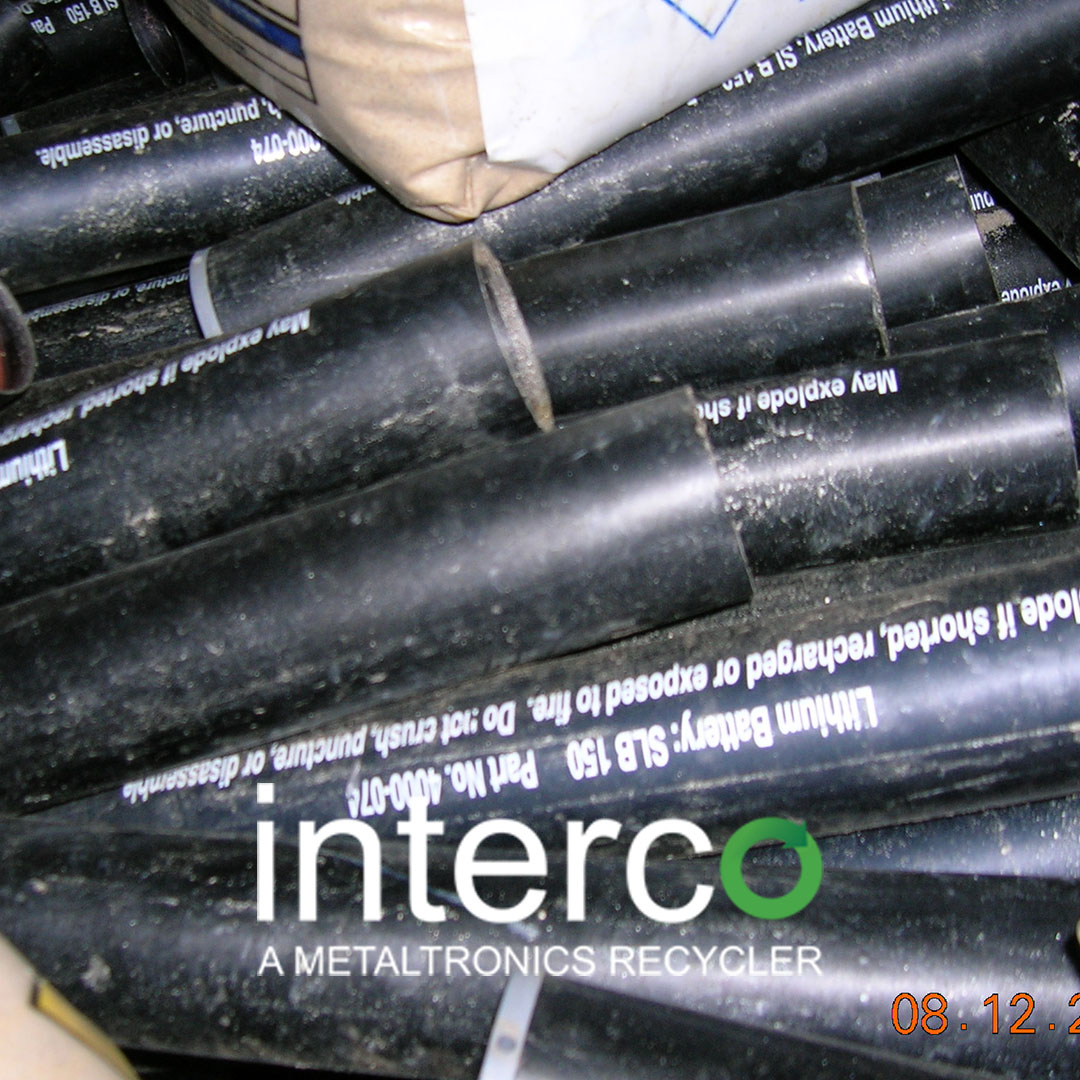
In addition to end-of-life batteries, Interco processes lithium-ion battery production scrap and battery-related materials generated during manufacturing. This includes off-spec cells, damaged modules, electrode scrap, cathode and anode material, and other byproducts. These streams span multiple chemistries and formats and are integrated into controlled workflows that maximize recovery while preserving chemistry integrity.
Traceability, Compliance, and Integrated Execution
Traceability and documentation are critical across all lithium-ion battery programs. The proprietary ERP platform at Interco captures inbound battery characteristics, logistics movements, processing stages, compliance checkpoints, and settlement data in real time. This visibility supports recall documentation, regulatory reporting, audit requirements, and internal governance for automotive OEMs, energy storage operators, manufacturers, and aggregators.
The Interco logistics department is central to execution across EV, energy storage, and consumer battery streams. Transporting lithium-ion batteries safely requires compliant packaging, carrier qualification, route planning, and contingency management. The Interco logistics department operates as an extension of the processing operation, synchronizing global sourcing and domestic pickups with processing capacity and downstream readiness. This integration minimizes dwell time and reduces risk across the system.
Lithium-ion battery recycling intersects with electronics scrap, nonferrous metals, metallic powders, and complex alloys. Intake and processing systems at Interco are designed to manage these intersections seamlessly, allowing mixed material streams to be evaluated and routed correctly without compromising safety or value. This enables partners to consolidate recycling programs under a single, accountable partner.
Regulatory frameworks governing lithium-ion batteries continue to evolve across automotive, consumer, industrial, and energy storage applications. Transportation rules, hazardous material classifications, battery stewardship laws, and extended producer responsibility programs add complexity. Interco maintains internal compliance expertise to navigate these requirements and reduce regulatory exposure for partners sourcing material globally.
Operational Systems Supporting Lithium-Ion Battery Recycling
- Global sourcing and controlled inbound logistics for EV, energy storage, and consumer batteries.
- Real-time ERP tracking of intake, processing, compliance checkpoints, and settlement data.
- Safety systems aligned with insurer expectations, regulatory requirements, and OEM standards.
- Chemistry-agnostic processing infrastructure capable of handling all lithium-ion formulations.
- Certified downstream placement with transparent reporting and auditable chain-of-custody.
Environmental responsibility underpins lithium-ion battery recycling operations at Interco. Recovering critical battery metals reduces reliance on primary mining, conserves energy, and supports circular material flows across transportation, electronics, and energy infrastructure. Responsible EV battery recycling is especially important as electrification becomes central to global mobility strategies.
Handling lithium-ion batteries at this scale, with EV batteries as the primary focus, demands experience, infrastructure, and discipline that few organizations possess. Interco has built its battery recycling platform specifically to address these demands, combining global sourcing capability, large-scale logistics execution, chemistry-agnostic processing, certified downstream placement, and transparent reporting into a single, scalable solution.
For automotive OEMs, energy storage operators, manufacturers, and aggregators seeking a partner capable of recycling lithium-ion batteries without limitation, Interco provides a proven framework. With EV batteries at the core and energy storage systems and all other lithium-ion batteries fully supported, the approach at Interco enables partners to manage battery recycling as a controlled, compliant, and value-driven operation rather than a reactive obligation.