eScrap Recycling
Origins of an Electronics-First Recycling Platform
Interco Trading, Inc. began in 1996 as an electronics scrap trading company. The original focus was on sourcing and placing eScrap in the global marketplace, developing an early understanding of material composition, pricing dynamics, and downstream requirements.
As volumes increased and material complexity became more apparent, the business quickly evolved beyond trading alone. Interco brought electronics processing in-house, disassembling computers and electronic equipment to separate, sort, and upgrade individual components that carried greater intrinsic value.
That evolution shaped how Interco operates today. Handling electronics at a component level required systems capable of managing variation, risk, and scrutiny from the outset. Material intelligence, disciplined intake, controlled workflows, and downstream accountability were not optional features; they were prerequisites. Those early decisions established a foundation that continues to define the business.
Scale, Volume, and the Role of Electronics Scrap
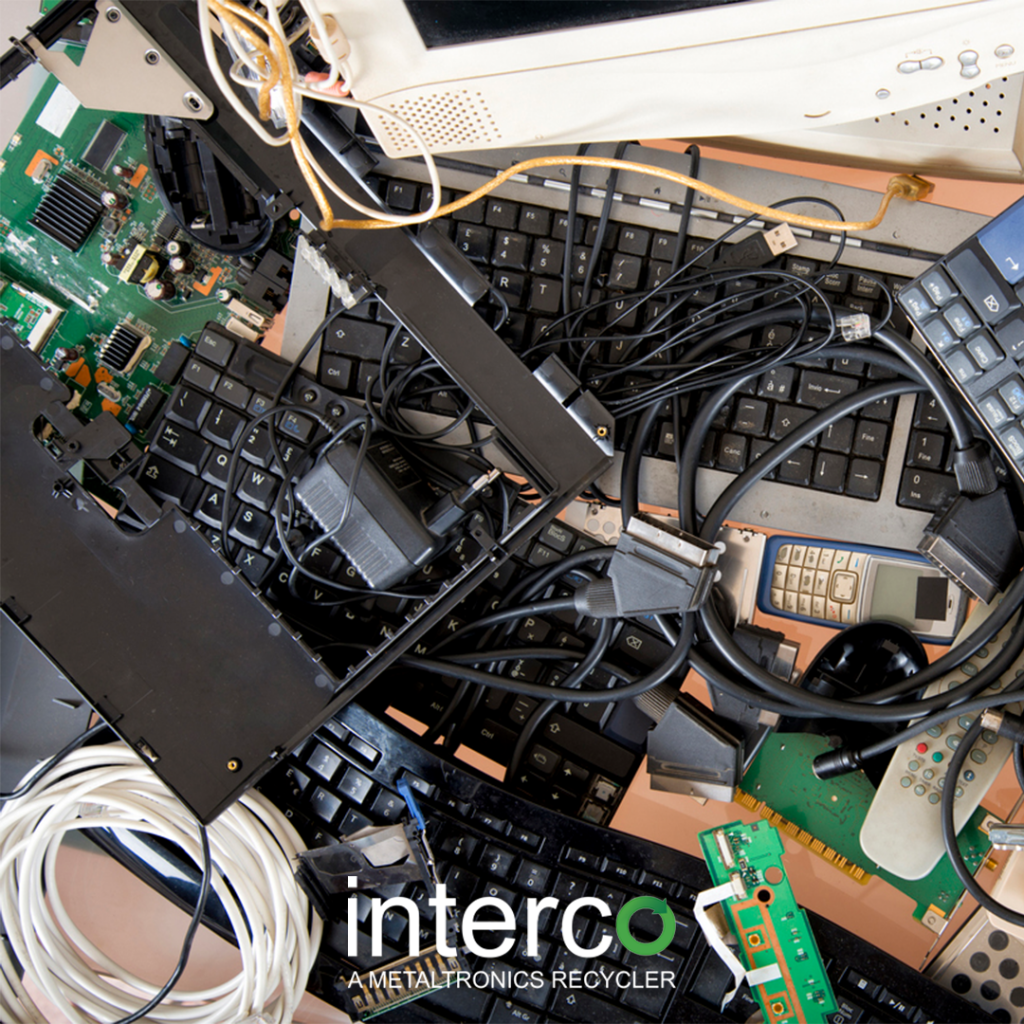
Interco now operates at significant industrial scale, purchasing approximately 12,000 to 15,000 metric tons of scrap each month across all material streams. Electronics scrap represents roughly 15 to 20 percent of that inbound volume. While nonferrous metals and batteries eventually grew to represent a larger share of total tonnage, eScrap remains a core and strategic part of the business. It is not a bolt-on service. It is the category around which the original operating model was built.
Electronics recycling is structurally more complex than nonferrous recycling. There are hundreds of distinct eScrap items, each with different material compositions, data considerations, regulatory requirements, and downstream specifications. By comparison, nonferrous recycling involves fewer than one hundred primary items. Many recyclers begin in nonferrous metals and later attempt to add electronics, often underestimating the operational and compliance burden. Interco evolved in the opposite direction, mastering the more demanding category first, then expanding into nonferrous metals and batteries using systems already designed for complexity.
Managing Complexity Across Mixed Material Streams
That evolution has practical consequences. Because Interco was built to manage hundreds of electronics items, the infrastructure, workflows, and material intelligence already existed to handle variation at scale. When nonferrous metals and batteries were added, they were integrated into an operating environment designed for granular separation, controlled processing, and detailed reporting. This is why Interco can accept inbound loads that include fifteen or more distinct nonferrous items alongside electronics material without sacrificing accuracy, pricing integrity, or turnaround time.
For suppliers, this capability creates a meaningful advantage. Interco allows mixed inbound loads that include eScrap, nonferrous metals, and batteries in the same shipment. Material does not need to be artificially separated upstream to accommodate limited processing capability. Each component is evaluated independently, routed through the appropriate workflow, and settled based on its true value. Suppliers can mix material streams and still receive premium pricing for both electronics and nonferrous material.
Key Advantages of Mixed-Load Acceptance
- Ability to receive electronics, nonferrous metals, and batteries in a single inbound shipment.
- Independent evaluation and settlement of each material stream without averaged pricing.
- Preservation of recoverable value even in highly complex or consolidated loads.
- Reduced upstream handling requirements for suppliers and scrap dealers.
- Consistent turnaround times despite variation in load composition.
Interco purchases material from a broad supplier base that includes corporate IT departments, data centers, manufacturers, utilities, healthcare systems, government entities, IT asset disposition firms, and professional scrap dealers. Scrap dealers in particular benefit from the ability to aggregate complex material streams and deliver consolidated loads without losing value. The approach at Interco allows dealers to maximize efficiency while maintaining pricing discipline and downstream compliance.
Controlled Processing, Compliance, and Downstream Accountability
Electronics material entering the system is evaluated immediately. Composition, recoverable value, processing requirements, data-bearing risk, battery content, and regulatory considerations are identified at intake. This determines how each item will be handled, processed, and placed. Early identification prevents cross-contamination, protects compliance integrity, and preserves recoverable value, especially when dealing with highly mixed inbound loads.
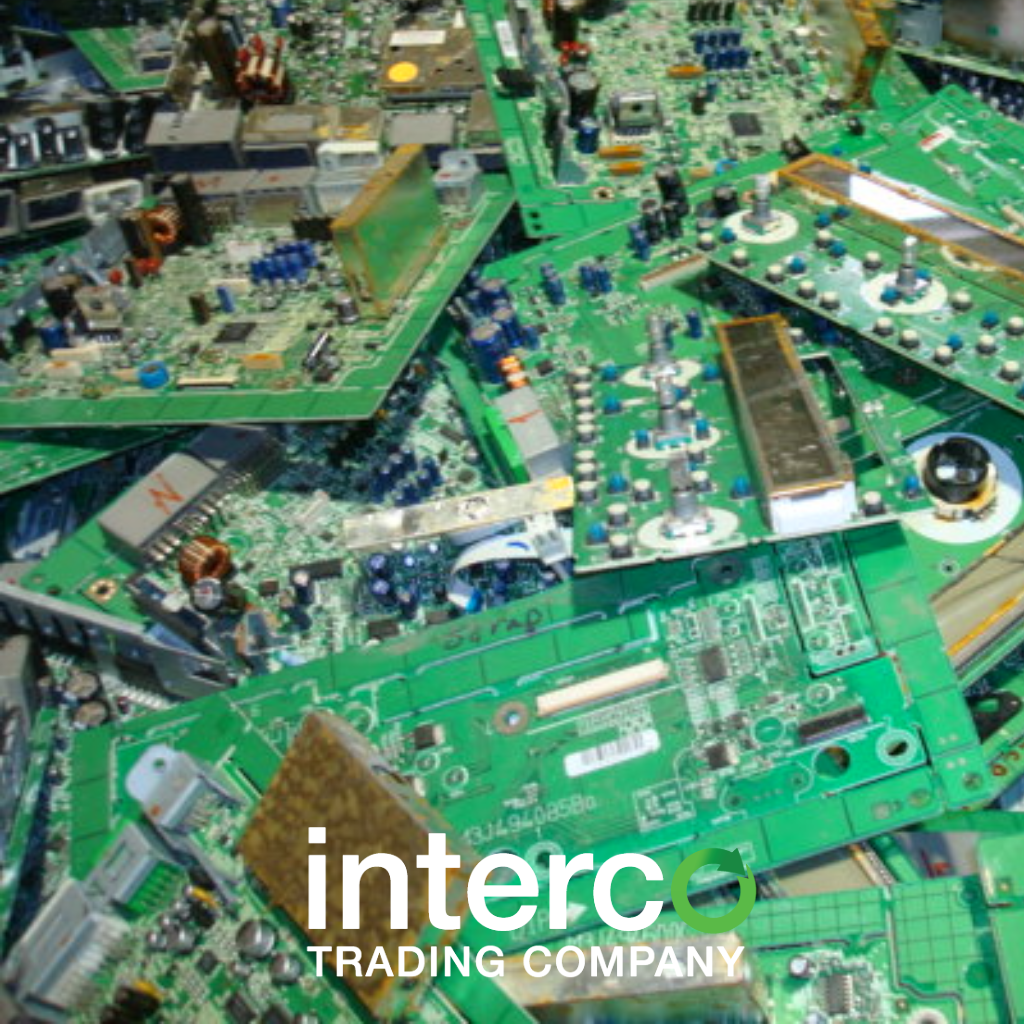
Processing is executed through controlled dismantling, separation, and preparation rather than indiscriminate shredding. Devices are broken down to isolate circuit boards, wiring, power components, metals, plastics, and batteries. Each category follows a defined workflow aligned with downstream specifications. Different materials move through different processing paths, reflecting the reality that eScrap is not a single material but a portfolio of distinct streams.
Processing and Compliance Controls Applied to Electronics Scrap
- Immediate intake evaluation to identify composition, data risk, battery content, and regulatory considerations.
- Controlled dismantling designed to preserve recoverable value rather than destroy material through shredding.
- Segregation of circuit boards, wiring, power components, metals, plastics, and batteries into defined workflows.
- Strict handling protocols for data-bearing material aligned with R2v3 requirements and internal governance standards.
- Exclusive use of accredited downstream partners for electronics scrap and data-bearing material placement.
Data-bearing material is handled under strict controls. Identification and segregation occur before material recovery begins. The approach at Interco aligns with R2v3 requirements and internal governance standards, ensuring that sensitive material is managed correctly from receipt through downstream placement. Maintaining certification requires discipline at every stage, and Interco meets those requirements continuously.
Downstream placement follows the same standard. Electronics scrap and data-bearing material are sold only to accredited R2v3 downstream partners. R2v3 certification for downstream processors handling data-bearing material is required to maintain compliance, and Interco ensures this requirement is met at all times. This protects suppliers, scrap dealers, and end clients from regulatory, contractual, and reputational risk.
Precious metals recovery remains an important component of electronics processing. Circuit boards and electronic components contain meaningful concentrations of gold, silver, palladium, and other precious elements. Recovering that value depends on proper segregation and placement with qualified refining partners. Interco works only with established downstream consumers that meet technical, environmental, and certification standards, ensuring consistency and accountability.
Battery-bearing electronics introduce additional complexity. Lithium-ion and other chemistries present safety and environmental risks if mishandled, particularly in mixed loads. Interco applies controlled segregation and preparation protocols designed for each battery type. This allows valuable base and critical metals to be recovered while minimizing fire, contamination, and compliance risk.
Integrated Logistics, Technology, and Long-Term Execution
Supporting the operation is the Interco logistics department, which functions as an execution arm of the processing workflow rather than a standalone service. Inbound purchases and outbound placements are coordinated to align with processing schedules and downstream requirements. This integration ensures predictable material flow even as volumes fluctuate and load composition varies.
The proprietary ERP platform serves as the system of record across the entire lifecycle of each shipment. Inbound weights, material classifications, processing stages, compliance checkpoints, and financial settlements are captured in real time. This visibility is essential when purchasing and processing tens of thousands of tons annually across hundreds of material types. Suppliers and scrap dealers receive accurate documentation and settlements, while enterprise clients gain transparency that supports audits and compliance oversight.
Operational Systems That Support Scale and Accountability
- Integrated logistics coordination aligned with processing schedules and downstream requirements.
- Real-time ERP tracking of material classifications, weights, processing stages, and compliance checkpoints.
- Financial settlement systems designed to handle hundreds of distinct material categories accurately.
- Documentation and reporting capabilities that support audits, certifications, and enterprise oversight.
- Infrastructure designed to absorb volume fluctuations without disrupting processing discipline.
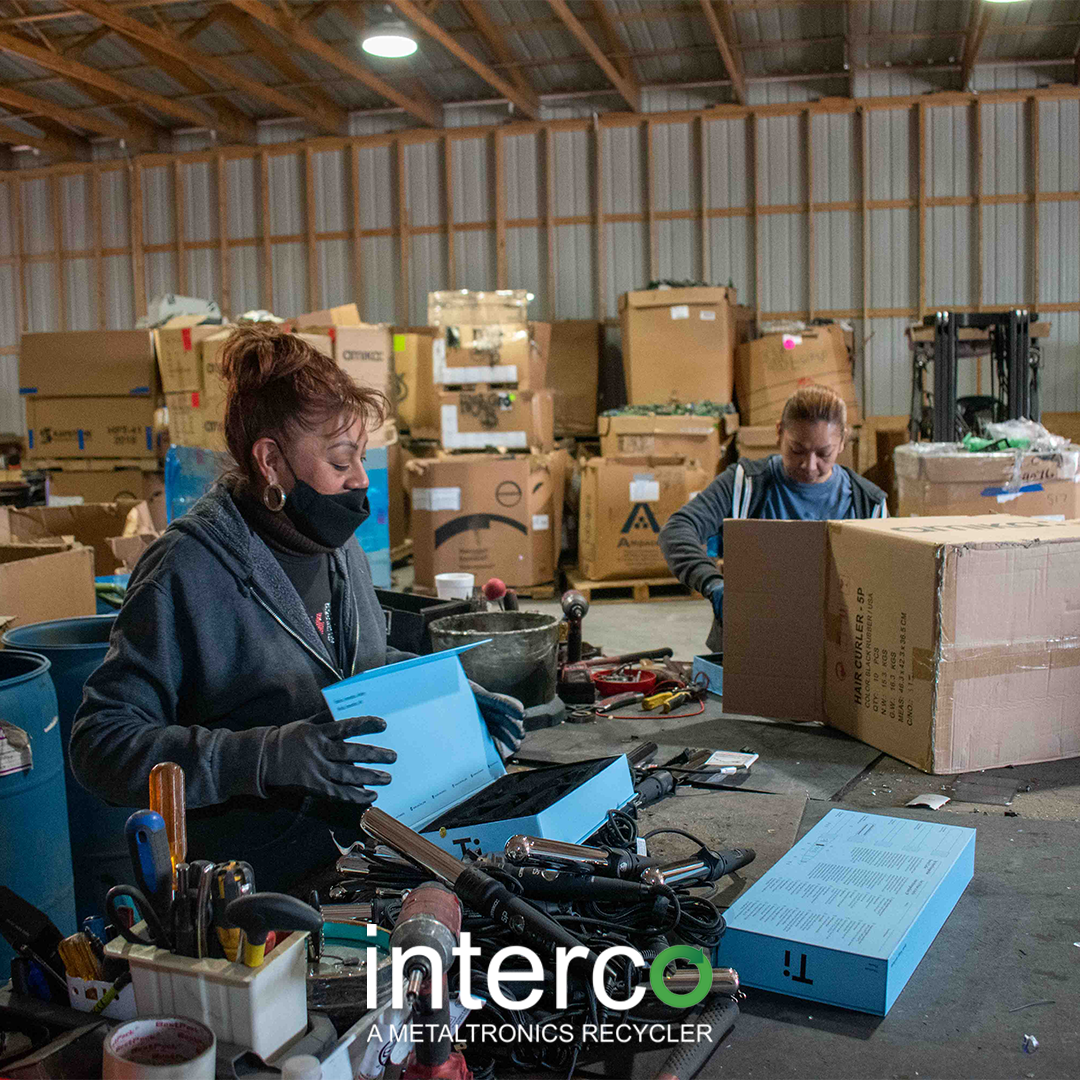
Interco ability to manage complexity at scale is a direct result of how the business was built. Starting as an electronics scrap trading company required a deep understanding of material value and downstream placement. Bringing processing in-house required operational discipline and technical rigor. Expanding into nonferrous metals and batteries leveraged that foundation rather than replacing it.
Electronics recycling at this level demands more than capacity. It requires experience, discipline, and infrastructure designed for variation. Interco has built its electronics recycling platform around those realities, combining scale, controlled processing, certified downstream placement, integrated logistics, and proprietary technology into a single accountable solution.
For organizations seeking a partner that understands electronics scrap not as an add-on but as a foundational capability, Interco provides a proven and scalable framework. Operating continuously since 1996, the company has evolved while maintaining the principles that defined its start: accuracy, accountability, and disciplined execution. By applying those principles across electronics, nonferrous metals, and batteries, Interco enables suppliers to move complex material streams efficiently while capturing full value across every category.